Seasonal Health
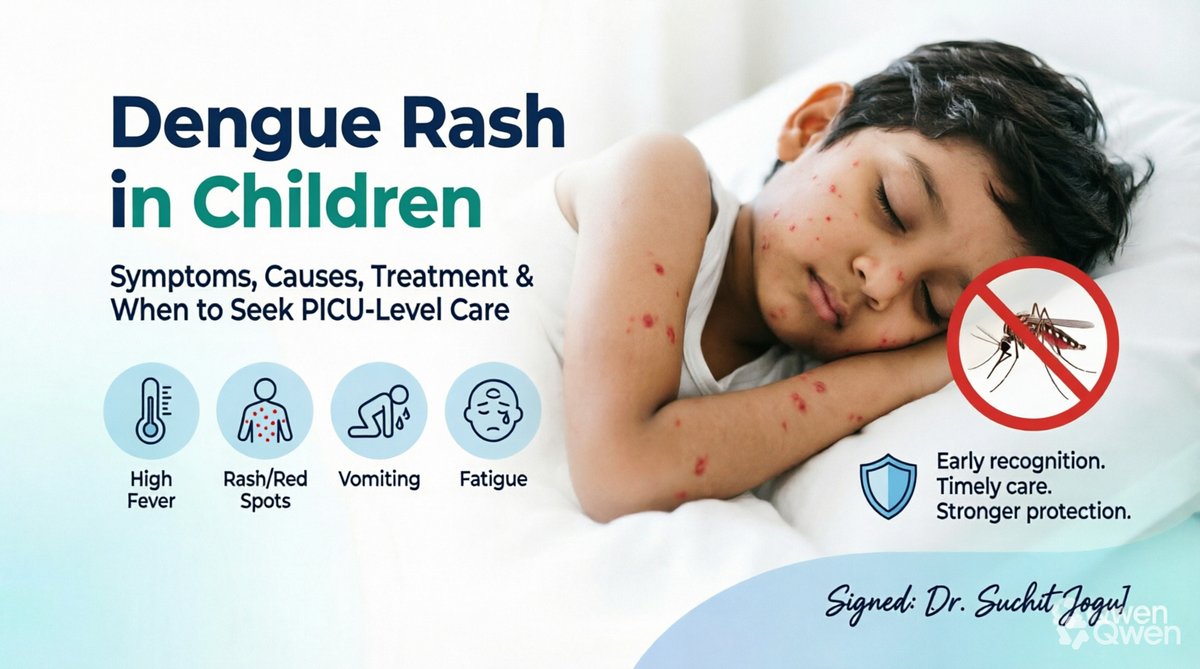
Dengue Rash in Children: What It Looks Like, and When to Worry
A red rash spreading across a feverish child's skin is one of the things that brings parents into my clinic fastest during dengue season. It's a fair reaction — but a dengue rash on its own is rarely the dangerous part of the illness. What matters more is timing it correctly against the rest of the illness and knowing which accompanying signs mean it's time to stop watching and start moving. I've covered dengue's broader warning signs in this earlier article; here I want to focus specifically on the rash itself, since it's usually the symptom parents notice first and worry about most.
When Does a Dengue Rash Appear?
Dengue in children typically unfolds in three stages, and the rash's timing depends on which stage your child is in. In the first day or two, some children get a brief, diffuse flush across the face and upper body that's easy to mistake for just "looking feverish." The rash most parents actually notice and call about shows up later — usually day 3 to 5 — often just as the fever starts to come down. That timing catches people off guard, because a dropping fever usually reads as improvement. With dengue, days 3 to 5 are exactly when I want families watching most closely, not relaxing.
What Does a Dengue Rash Actually Look Like?
There isn't one single "dengue rash" — I see a few different patterns, sometimes overlapping in the same child:
- Early flushing (day 1–2): A general pink or reddish tinge across the face, neck, and chest, usually not itchy, that can come and go within hours.
- The classic rash (day 3–5): Flat red patches or slightly raised pink-to-red bumps spreading over the trunk and limbs. Parents sometimes describe small clear patches of normal skin within the rash — this "islands of white in a sea of red" appearance is fairly characteristic, though not every child shows it clearly.
- Petechiae: Tiny pinpoint red or purple dots, caused by small amounts of bleeding under the skin. Unlike a typical rash, these don't fade or blanch when you press on them. Petechiae are the pattern I ask parents to bring their child in for the same day, rather than monitor at home.
- Recovery-phase changes: As the illness resolves, the rash usually fades over several days, can turn mildly itchy, and the skin may peel lightly — normal, and not a cause for concern by itself.
One reassurance worth repeating: the rash itself isn't contagious. Dengue only spreads through the bite of an infected mosquito, never from one person to another directly.
Does Every Child With Dengue Get a Rash?
No — plenty of confirmed dengue cases in children never develop a visible rash at all, so its absence doesn't rule dengue out if a child has a high fever with other symptoms like body aches, headache, or vomiting during monsoon season. A rash also can't confirm dengue on its own, since several other childhood illnesses produce similar-looking skin changes — which is why I always combine the physical exam with the history and, when appropriate, a blood test rather than diagnosing from the rash alone.
Is a Dengue Rash Itchy?
Usually not while the fever is still active — most children don't complain of itching during the early or classic rash phase. Itching is more typical of the recovery phase, once the fever has settled and the skin starts to heal and occasionally peel. If a rash is intensely itchy from the very start, especially with hives or welts, that points more toward an allergic reaction than dengue.
Dengue Rash vs. Other Childhood Rashes
| Feature | Dengue Rash | Allergic Rash / Hives | Measles |
|---|---|---|---|
| Fever pattern | High fever for several days, rash often as fever eases | Usually no fever | Fever and cough/cold symptoms before rash appears |
| Itching | Usually mild or absent early on | Often intensely itchy | Mild itching |
| Spread pattern | Trunk and limbs, sometimes with pale "islands" in red skin | Can appear anywhere, often comes and goes quickly | Starts on the face, spreads downward over days |
| Pressing the skin | Petechiae (if present) don't fade with pressure | Blanches (fades) with pressure | Blanches with pressure |
| Other clues | Body aches, eye pain, low platelet count on testing | Recent new food, medicine, or contact exposure | Red, watery eyes and runny nose before the rash |
This table is a general guide, not a diagnosis — any child with fever and a new rash during dengue season deserves an in-person medical evaluation rather than a judgment call from a comparison chart.
How Is Dengue Confirmed?
A rash alone isn't enough to confirm dengue — I combine it with the child's symptom timeline, exam findings, and blood work. An NS1 antigen test is most useful in the first few days of fever, while an IgM antibody test becomes more reliable from around day 5 onward. A complete blood count tracking platelet count and hematocrit is repeated over the illness, since the trend matters more than any single reading. I've written more on this testing process in the main dengue warning signs article.
Home Care for a Dengue Rash
The rash itself doesn't need any specific medicine — it resolves on its own as the underlying infection clears. What actually helps is treating the illness supportively: plenty of oral fluids or ORS, paracetamol for fever and discomfort at the correct weight-based dose, loose breathable clothing so irritated skin isn't rubbed further, and close monitoring of hydration and activity level. Avoid ibuprofen, aspirin, and similar anti-inflammatory medicines in any child with suspected dengue, since they can increase bleeding risk — paracetamol is the safer choice for fever control.
Warning Signs That Need Same-Day Medical Care
The rash is rarely the dangerous part of dengue — these accompanying signs are what I tell parents never to wait out, no matter how the rash itself looks:
- Persistent vomiting, or inability to keep fluids down
- Severe or worsening abdominal pain
- Bleeding from the gums or nose, or blood in vomit or stool
- Unusual drowsiness, confusion, or difficulty waking
- Cold, clammy skin, or a rapid weak pulse
- Difficulty breathing
- Petechiae (non-blanching pinpoint spots) anywhere on the skin
These signs often show up right as the fever is coming down — the exact point many families mistake for recovery. That's precisely why I keep monitoring children closely through days 3 to 7, even once they seem to be improving.
A Pediatric Intensivist's Perspective on Severe Dengue
Most children with dengue, rash included, recover fully with fluids, rest, and outpatient monitoring. A smaller number progress to warning-sign or severe dengue, where plasma leakage, a sharp platelet drop, or early shock can develop within hours. As a DrNB-certified Pediatric Intensivist, this is the phase I focus on most: getting a child into PICU-level monitoring — careful fluid balance, continuous vital-sign tracking, and rapid repeat blood testing — before shock sets in, not after. Practicing as both a general pediatrician and intensivist at KIMS Cuddles, Kompally means a child who needs that escalation doesn't need to change doctors or hospitals to get it.
Preventing Dengue During Hyderabad's Monsoon Season
Since the rash is simply a symptom of the underlying infection, preventing the mosquito bite is what actually prevents the illness. Empty and scrub water-holding containers, coolers, and flowerpot trays weekly, use age-appropriate repellents and mosquito nets, dress children in long sleeves during the day (Aedes mosquitoes bite mostly in daylight hours, especially early morning and dusk), and keep window and door screens in good repair. These steps matter most for families across Kompally, Suchitra, Bollarum, and Secunderabad during the July–November monsoon window, when local case numbers typically rise.
FAQs
What does a dengue rash look like in children?
It can look different from child to child — flat red patches, slightly raised pink-red bumps spread over the chest, back, arms and legs, or tiny pinpoint red-purple spots called petechiae that don't fade when pressed. It most commonly appears around day 3–5 of fever.
Is a dengue rash itchy?
Not usually while the fever is active. Mild to moderate itching, and sometimes light peeling, is more common during recovery as the skin heals.
Does every child with dengue get a rash?
No. Only a proportion of children with dengue develop a visible rash — plenty of confirmed cases have no rash at all, so its absence doesn't rule dengue out.
Are red or purple pinpoint spots (petechiae) on my child dangerous?
They need same-day medical evaluation. Petechiae reflect small amounts of bleeding under the skin and can signal a falling platelet count, so a pediatrician should assess them rather than watching and waiting.
How long does a dengue rash last?
For most children it fades within a week, sometimes with mild peeling, and clears without scarring. General tiredness can linger for longer even after the rash and fever are gone.
When should I take my child to a hospital rather than manage the rash at home?
Go in the same day for persistent vomiting, severe abdominal pain, any bleeding from the gums, nose, vomit or stool, unusual drowsiness, cold or clammy skin, or difficulty breathing — regardless of how the rash itself looks.
This article is for general educational purposes and is not a substitute for professional medical advice, diagnosis, or treatment. If you suspect dengue in your child, seek medical evaluation promptly rather than waiting to see if symptoms resolve.